
In a recent post on X (November 15, 2026), Patrick Collison, the co-founder of Stripe, asked questions about society in the age of AI. I am reproducing his post here in italics and interspersing my comments.
Smith and Montesquieu thought that markets and commerce made us better: that they create an incentive to pursue self-improvement and to create things of value for others. In the positive AI visions, where the labor of humans is made redundant, I find myself wondering how we fare in the presumptive absence of these incentive gradients. Perhaps we are released to a life of freedom, where we can study Mozart and read Dickens, but that still seems complicated: both Mozart and Dickens were themselves deeply commercially-motivated in the production of their work, as were most of the great artists through human history. If the premise is that nobody will need to work or produce, how confident are we that we actually get the next Mozart and Dickens? The relevant question is not the partial equilibrium of whether one individual can pursue a life of enlightened leisure, but the general equilibrium of what form a society as a whole will take on.
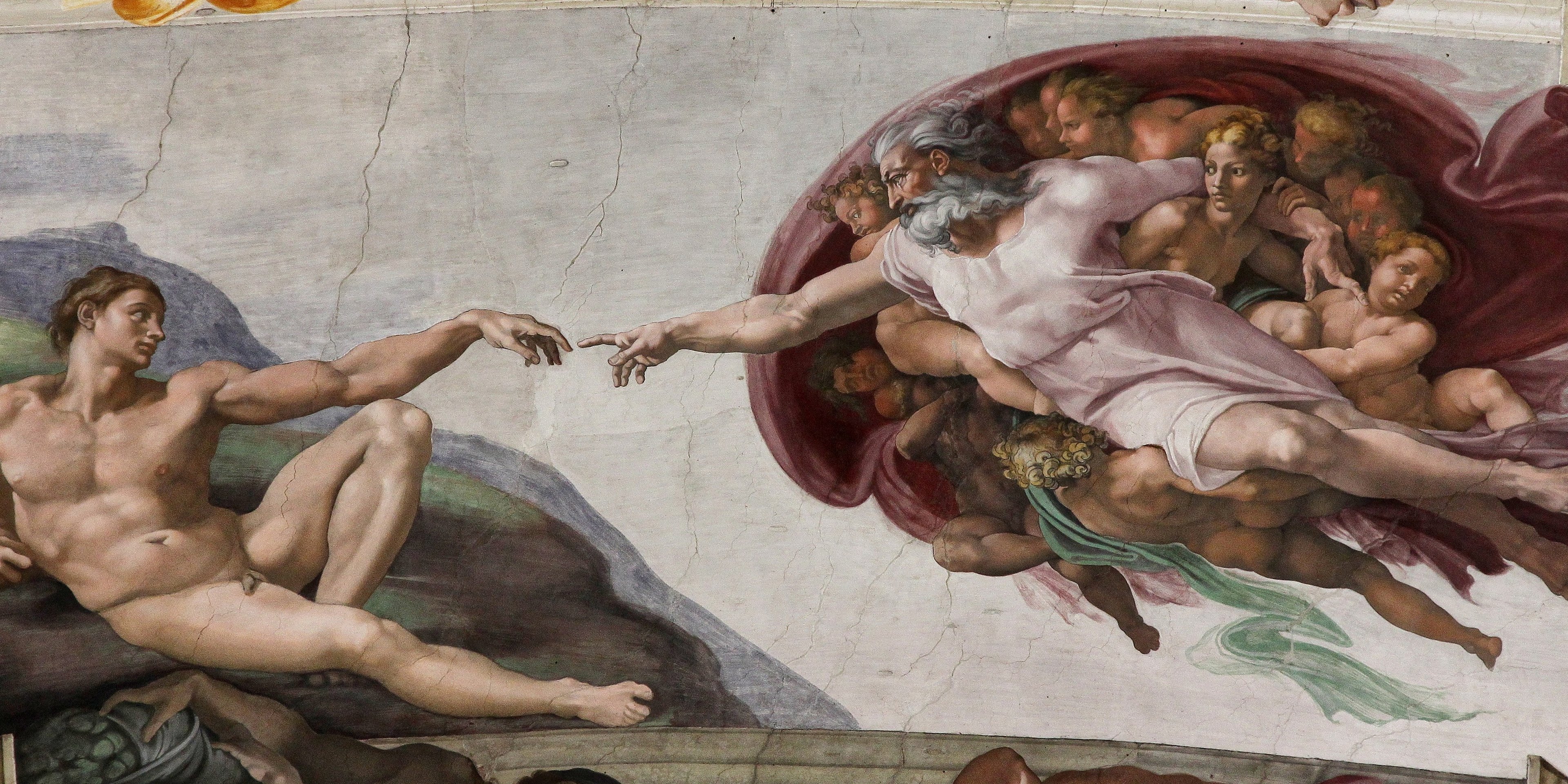
Adam Smith’s theory also had an intrinsic component because he believed in natural social instincts as elaborated in his earlier book The Theory of Moral Sentiments (1795). One of the virtues he analyzes is Beneficence, which means actively promoting the happiness of others. This builds on Aristotle’s thinking in the Nicomachean Ethics where he argues that fortune has little value outside the exercise of beneficence. During the Renaissance major patrons, such as the Medici, supported the arts both for strategic reasons but also out of this virtue. Patronage enabled artists such as da Vinci to strive for artistic excellence with little regard to any commercial appeal (beyond securing ongoing patronage). So this model seems entirely available going forward as well. Some people will want to create extraordinary art, possibly on a grander scale than has ever been seen before, and others will want to support it with their resources. This feels like a sustainable equilibrium.
One could maybe invoke Periclean Athens or the aristocratic gentleman scientists of Victorian England as a counterpoint. While these individuals were perhaps not motivated by commercial considerations, they were embedded in wider societies shaped by commerce, attendant betterment, and trade: Byron was himself upper class, but he was also surrounded by and writing for an educated bourgeois audience. So we’re back to the equilibrium question. Furthermore, even these individuals were surely motivated by a sense of high-stakes and consequential agency: if they did not apply themselves to their labors, they presumably believed that the work would not otherwise exist. Thucydides was addressing pressing military matters.
Consequential agency is only one possible source of motivation. Consider someone like Alex Honnold. What motivated him to free solo El Capitan? A cynic might argue that it was simply a publicity stunt. But human feats like this abound and many are undertaken in relative obscurity. It seems more right that some humans are drawn to the extreme for internal reasons. Also often these pursuits intentionally reject available technology. Take free diving as an example. Or my own favorite sport of sailing. I mean, why sail at all in the age of motor boats?
So I would like to read more optimistic cases from AI proponents about what a society (vs individual life) looks like if everything goes well: what people do, why they do it, whether humans achieve excellence (and in which domains), and which historical groups we should look to as relevant precedent.
So yes. We have great examples of humans thriving for excellence, even in super weird domains (e.g. speed solving of a Rubik’s cube). There is absolutely no reason to expect why this would go away. If anything, freed from economic concerns we will see many more such pursuits. For example, I can easily envision people building their own rockets and attempting to reach the Moon or even Mars in homebuilt ships, or explore the depths of the oceans in all kinds of new submersibles. The precedents are explorers, artists, mathematicians, etc. – I mean consider Grigori Perelman who rejected the Millennium Prize for proving the Poincaré conjecture. There have always been humans with incredibly strong intrinsic motivation. And if we change the education system away from the current industrial age assembly line towards bespoke tutoring we will wind up with far more of that!
One can perhaps imagine that humans will turn out to have a strong preference for work created by other humans. This may work in certain domains (ceramics?), but for how many will it actually apply? (I’m told that much of what is sold on indie crafts websites is now in fact manufactured in China.) It’s hard to see how this human preference, even if strong, would, for example, save scholarship.
Human preference for human work is quite broad. We see this in people attending concerts, even though recorded music has been around for a long time. The Chinese knock-offs on craft websites don’t undermine but strengthen this. People badly want human crafted items but those are genuine luxuries at the moment. So few people can afford the real deal and many will settle for fake, much as has been the case with luxury brands.
Another idea would be to accept that nobody will become Einstein or Mozart or Byron, and that human excellence as such diminishes, but that there are compensatory benefits (planet brains and Dyson swarms?).
As per my comments above there is no reason to expect less excellence because some humans are intrinsically motivated to seek it. There is another, controversial reason, for expecting the opposite: more outstanding individuals because they will be engineered. This will happen both through augmentation, such as brain-computer interfaces, and through genetic engineering. There are profound moral questions around this and legal limits on such changes may be imposed but I believe that it will contribute to more human outliers.
I believe that we can satisfy individual desires, but to what extent will we cultivate behavior worthy of admiration? Will a post-scarcity society mold capable and ambitious people? Which institutions will sustain them and which responsibilities will they have? I’d like to hear more of the equilibrium for the maximalist case spelled out.
We have a clear picture of what the necessary institutions look like. We can see them in domains such as mathematics that have historically existed largely outside of commercial incentives: prizes and systems of recognition are powerful amplifiers of intrinsic motivation. If anything, when explicit incentives tied to measurements are introduced they tend to lead to large distortions via Goodheart’s law. This has been massively detrimental to academic research, for example. We are already seeing the new system emerge with donors who are willing to support researchers directly, bypassing the traditional academic institutions. We are also seeing it with new private prizes, with the X-Prize having been the vanguard. So yes, we will return to a system of patronage, societies, and prizes. Important note: we should not return to patronage in the legal system (read the outrageous accounts of how that worked by Ada Palmer in Inventing the Renaissance).
Why did I title the post “Eutopian Society”? Because Gigi and I are working towards a society that enables more human excellence in the here and now. We are calling this effort Eutopia, which means “a good place” (as opposed to utopia which literally means no place). It is our endeavor to show what kind of society could enable human thriving in the age of AI.